What is Limb Salvage Surgery?
Limb salvage surgery (also known as limb-sparing surgery) is the surgical removal of a bone or soft tissue tumor with clear oncological margins while preserving the major nerves, blood vessels, and musculature required for the limb to function.
In the past, primary bone cancers like osteosarcoma or Ewing's sarcoma routinely resulted in high-level amputations. Today, advances in 3D CT virtual surgical planning, multi-agent chemotherapy, and modular megaprostheses allow over 85-90% of patients to safely keep their limbs without compromising survival rates.
Distal Femur Modular Megaprosthesis
The distal femur is the single most common site for primary bone malignancies, especially osteosarcoma and giant cell tumors. Distal femur megaprosthesis surgery involves en-bloc resection of the affected lower femur and knee joint, followed by reconstruction with a cemented modular prosthesis.
- • Rotating-Hinge Mechanism: Provides flexion, extension, and controlled rotation to minimize mechanical loosening.
- • Modular Spacers: Available in precise millimeter increments to accurately match the patient's contralateral leg length.
- • Immediate Weight-Bearing: Rigid intramedullary fixation allows rapid early ambulation.
Distal Femur Modular System Architecture
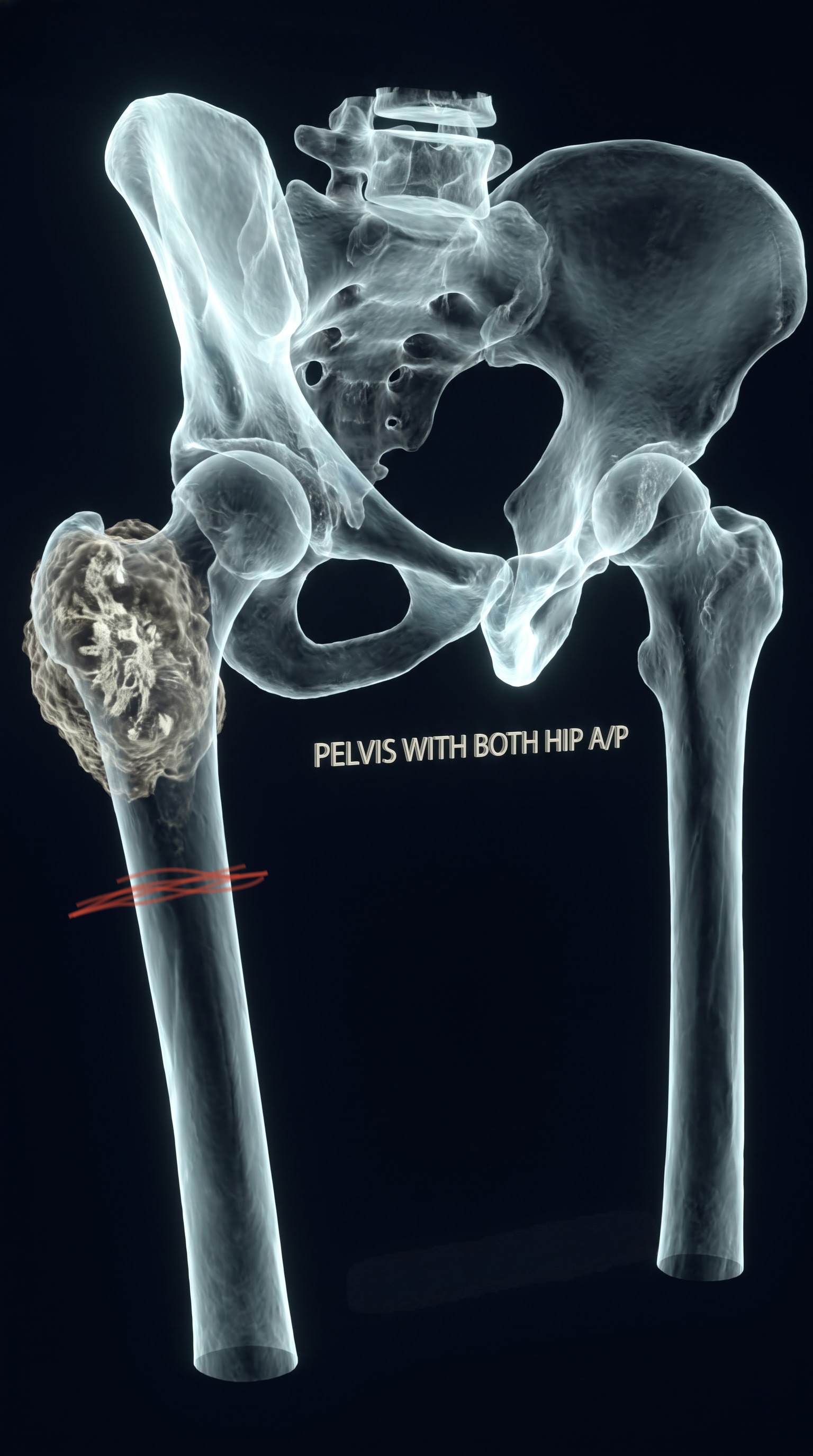
Proximal Femur Modular Megaprosthesis
Tumors involving the femoral head, neck, and trochanteric region require meticulous surgical resection and specialized reconstruction to restore the hip joint mechanics.
- • Modular Stems & Necks: Customizable neck-shaft angles (130° / 135°) and anteversion to recreate anatomical hip offset.
- • Abductor Muscle Re-attachment: Dedicated suture holes allow rigid re-attachment of the gluteus medius and minimus tendons, preventing Trendelenburg limp.
- • Bipolar or Total Hip Options: Tailored according to acetabular condition and patient age.
Proximal Tibia Modular Megaprosthesis
The proximal tibia represents one of the most technically demanding areas in orthopaedic oncology because of the superficial location of bone, vulnerable anterior soft tissue envelope, and the vital attachment of the patellar tendon (quadriceps extensor mechanism).
1. Radical Resection
Clear margin excision of the proximal tibia tumor while preserving the peroneal nerve and popliteal neurovascular bundle.
2. Modular Reconstruction
Implantation of modular tibial body, rotating-hinge knee articulation, and porous-coated attachment plate.
3. Gastrocnemius Flap
Medial gastrocnemius rotational flap transposed over the prosthesis to provide robust biological soft-tissue coverage and reinforce tendon healing.